

- GPS
- 22.309364, 114.364845
- Depth
- Scuba boat dives and freediving mainly take place on the island's southeastern side, near Po Yue Pai. Shallow boulder area (4 - 9 m): a slope of large rocks begins at the entry point, with dense anemone colonies forming a characteristic anemone forest. Deeper sandy and silty area (10 - 25 m+): the slope continues down beyond 20 m and gradually becomes sand and silt. Its depth and better water quality make it a common location for Advanced Open Water (AOW) scuba and freediving depth training.
- Minimum certification
- OW
- Conditions
- Difficulty: the shallow area at 4 to 9 m suits divers of all levels, including Open Water beginners. The deeper sandy and silty area beyond 15 m is an advanced site.
- Hazards
- Dangerous areas that must not be entered: 1. The narrow southern channel leads towards Lung Shuen Pai on the island's eastern side. Its currents are extremely strong, and dive boats generally cannot approach. Never try to enter the channel or swim around to the other side of the island: if swept away, you would be extremely difficult for a boat to find and rescue. 2. Sea-cave interiors: spectacular caves, including Kwan To Cave, line the shore, but divers must not venture blindly inside. Waves and surge against the rock walls, difficulty swimming against current, or falling rubble can trap divers and cause accidents. Avoid disturbing sediment: below 10 m, poor finning technique can easily stir up the sandy and silty bottom and instantly reduce visibility. Maintain strict neutral buoyancy and always carry an SMB.
- Access
- Dive boats generally depart from Sai Kung Pier or Hebe Haven Pier. The one-way distance is about 13 km and the trip takes about 45 to 60 minutes, or about 30 minutes by private speedboat. Diving is possible all year, but visibility is best in autumn and winter, from October to the following March. Winter water is clearer and Sargassum is abundant. In summer, pay particular attention to southwesterly winds and typhoon-season swell.
Introduction
Basalt Island — 火石洲 — lies on the outer edge of Leung Shuen Wan Hoi in Sai Kung, the largest island of the Ung Kong group. It belongs to the Hong Kong UNESCO Global Geopark, and above water it is known for dramatic hexagonal volcanic columns and sea arches.. Among Hong Kong divers it is a well-loved classic. The ecology is extremely varied, and the site carries both easy ground for newer divers and demanding deep sections for experienced ones. More than 160 species of reef fish have been recorded here.
Highlights
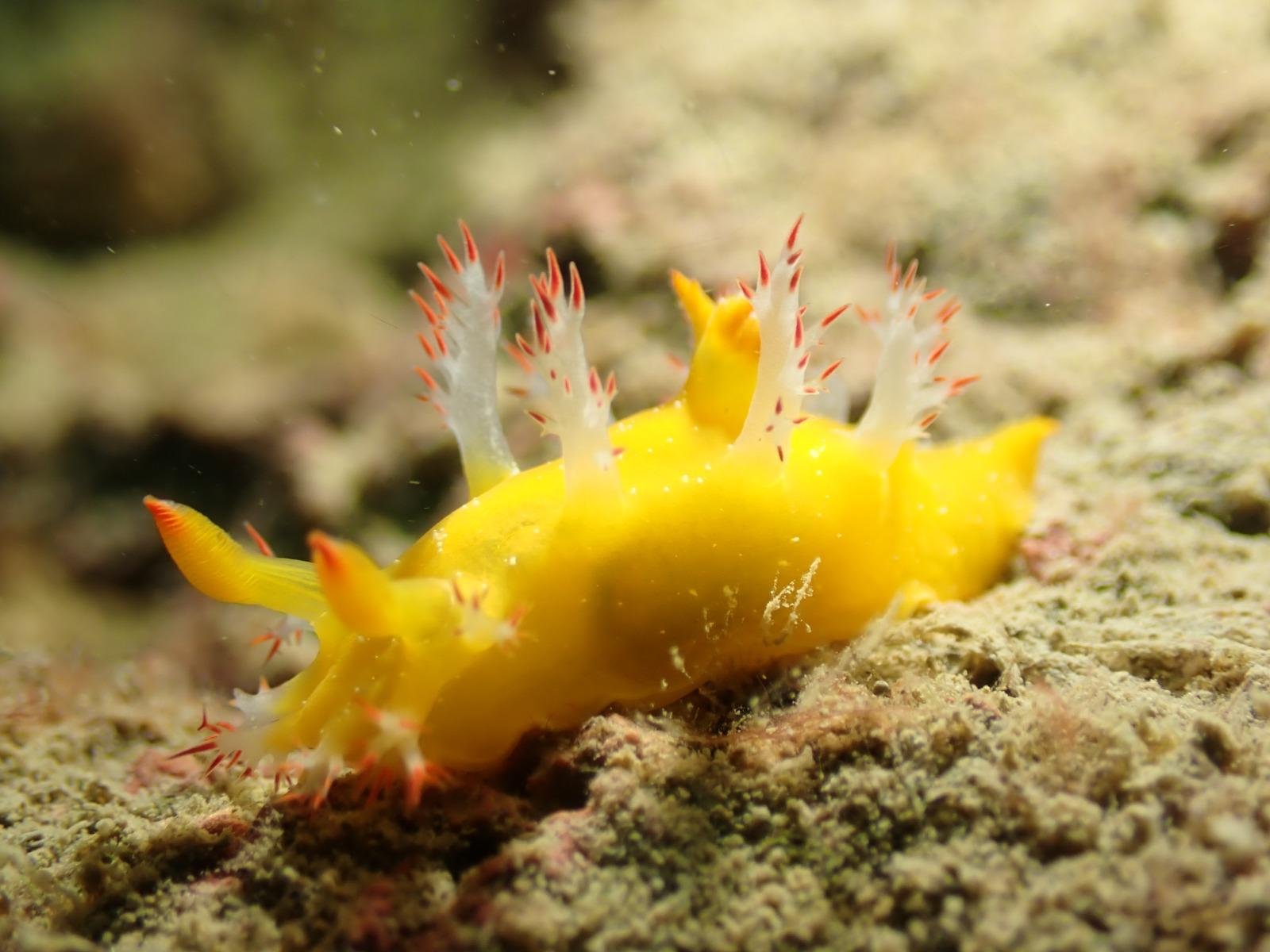
Welcoming but fierce clownfish: the shallow waters at Po Yue Pai have many white anemonefish. They are strongly territorial, especially while spawning. If divers approach too closely, the fish advance, make threatening biting sounds and may bite, leaving small tooth marks rather than broken skin. Rich invertebrate life: careful torch searches on the sandy and silty bottom below 10 m can reveal colourful sea apples (a type of sea cucumber), leopard anemones, sun corals, black corals, sea fans, and saw-blade shrimp, Xeno crabs, decorator crabs and various nudibranchs hidden among the corals. Eastern beach and sea caves: some freediving or private-speedboat trips stop at an unnamed pebble beach on the island's eastern side, with clear water about 6 to 8 m deep and the feel of an overseas dive site.
Notes
Historical note: in addition to its geological value, Basalt Island retains a piece of history. In 1948, Hong Kong's first commercial airliner crash occurred here when the aircraft hit the island in thick fog. Those killed included a grandson of US President Roosevelt and Shanghai textile industrialist Rong Yi-ren, the elder brother of Rong Yiren. A memorial to the crash still stands on the island.